

Appearance
What is a Prediction Market and How Does Outcora Work
1. What is a Prediction Market?
A prediction market is a financial mechanism where people trade on the outcomes of future events. The price of a contract in such a market reflects the collective assessment of an event's probability.
In simple terms:
If many people believe an event will happen — the price rises. If most are doubtful — the price falls.
Unlike polls or expert assessments, a prediction market works through the financial accountability of participants. People risk their own capital, so their assessments are typically more considered.
2. Why Are Prediction Markets Considered Accurate?
The idea is based on the principle of "wisdom of the crowd":
- Each participant has partial information.
- The market aggregates this knowledge through the price mechanism.
- Financial incentives motivate rational behavior.
When new information appears — news, statistics, statements — the price reacts instantly.
This forms a dynamic, constantly updated assessment of the future.
3. How Does It Work in Practice?
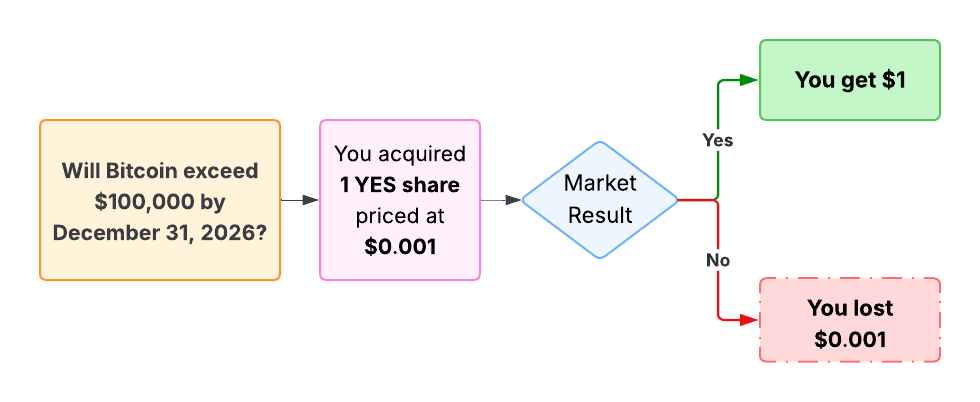
Example event:
"Will Bitcoin exceed $100,000 by December 31, 2026?"
A market is created with two outcomes:
- YES
- NO
Each contract costs between 0 and 1 USDC.
If:
- YES = 0.62
- NO = 0.38
The market estimates the probability of the event at approximately 62%.
The price is not set by the platform — it's formed by users through buying and selling.
4. How Outcora Works
Outcora is a decentralized prediction market that uses an order book.
Mechanics:
- A user places a buy or sell order.
- Another user accepts this order.
- The trade occurs.
- The price changes according to supply and demand.
There is no central party that sets the odds.
5. How Is This Different from Betting?
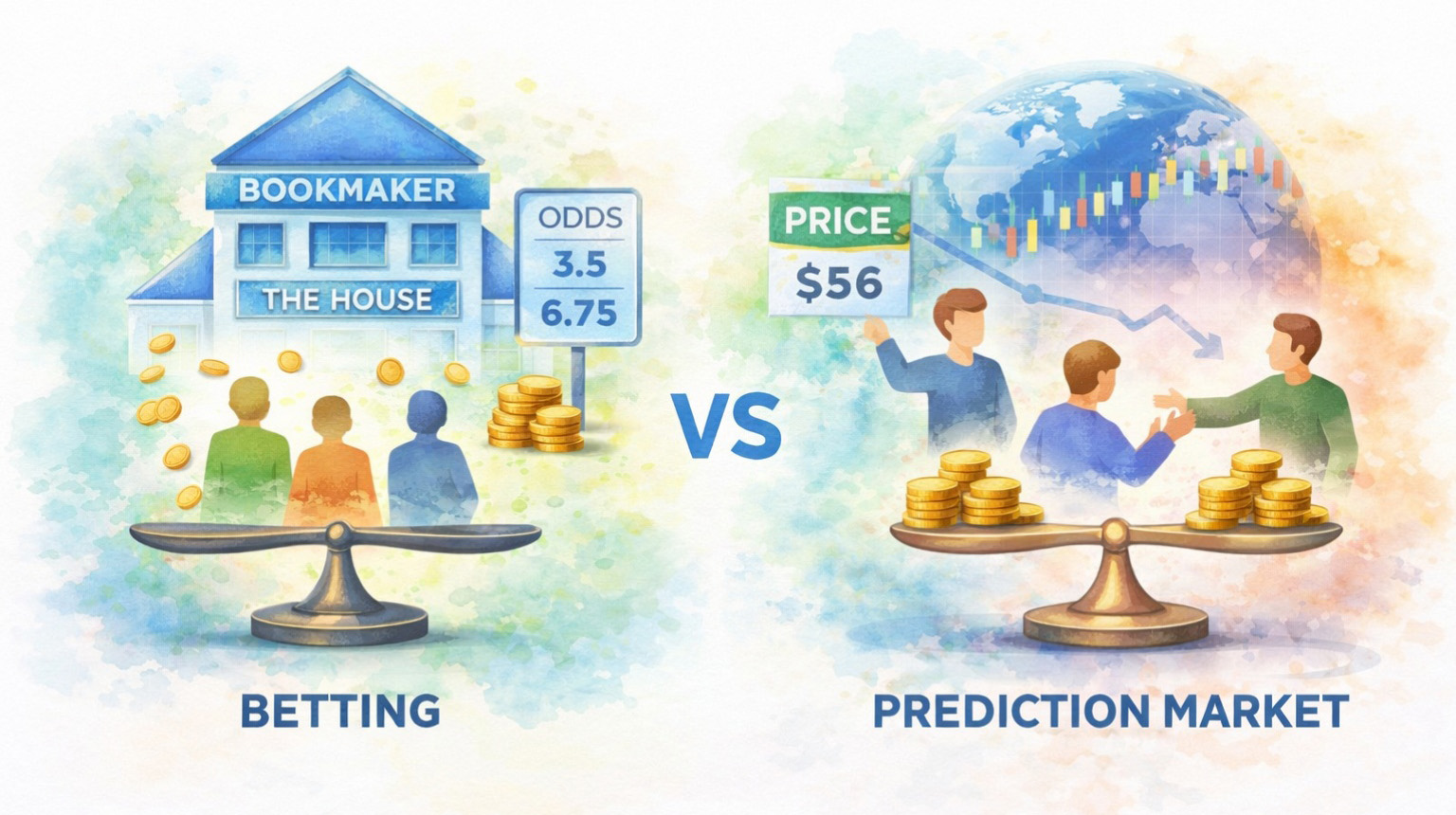
Prediction market ≠ bookmaker.
In betting:
- odds are set by the bookmaker
- the bookmaker has a margin
- you play against "the house"
On Outcora:
- there is no "house"
- price is formed by participants
- the platform has no mathematical advantage
- you trade with other users
This is closer to the stock market than to gambling.
6. Do You Have to Wait for the Event to End?
No.
You can:
- sell your position early
- lock in profits
- reduce risk
This makes the system liquid and flexible.
7. How Is the Outcome Determined?
Each market has:
- a clear event formulation
- a specific end date
- a defined resolution source
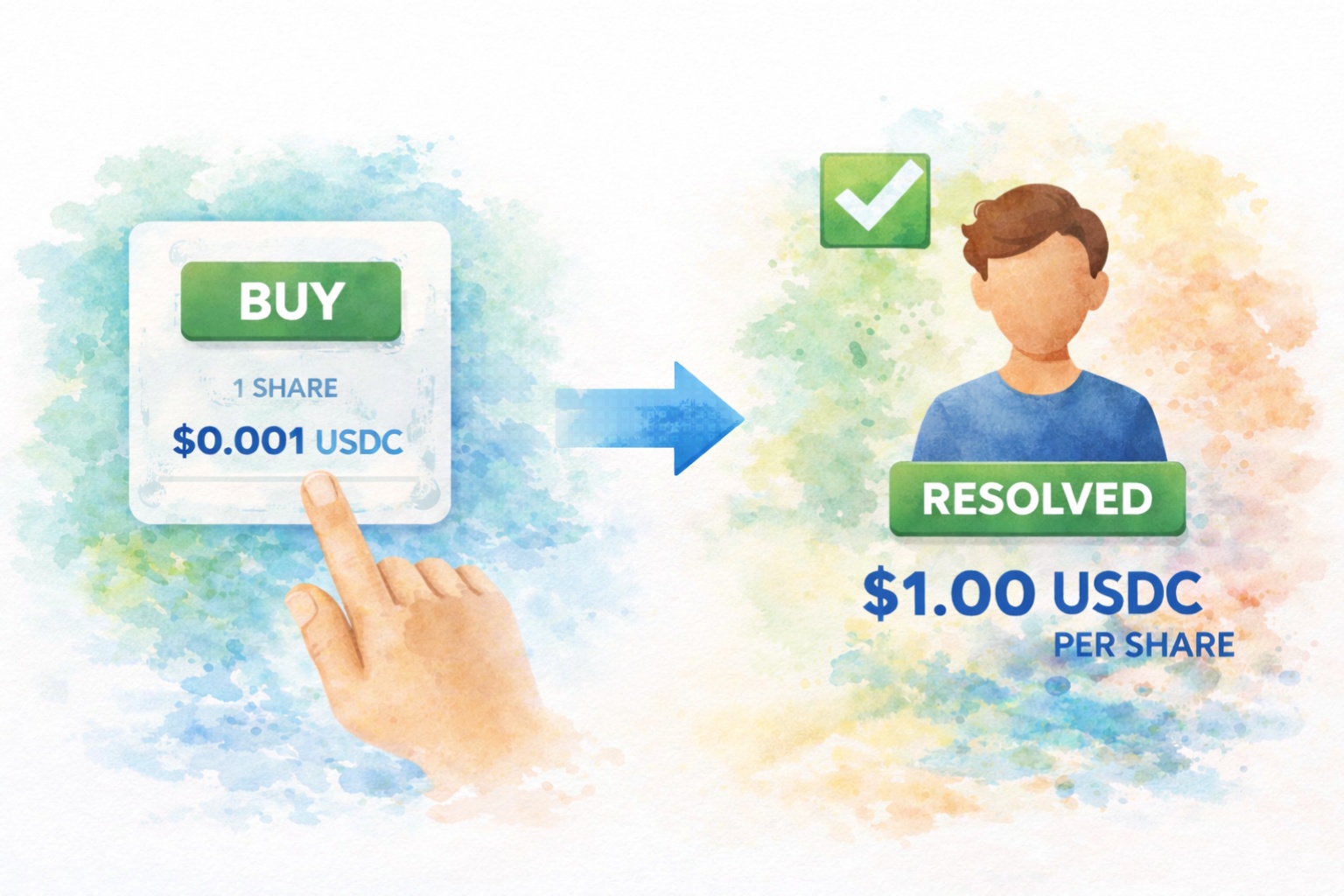
After the event occurs, the market transitions to RESOLVED status, and contracts are automatically valued:
- 1.00 USDC if the event happened
- 0.00 USDC if not
Settlements happen transparently and automatically.
8. What Are Prediction Markets Used For?
- Assessing political events
- Forecasting economic indicators
- Evaluating cryptocurrencies
- Hedging risks
- Testing analytical hypotheses
Prediction markets allow you to turn information into a financial position.
9. Why Does This Matter?
The world is overloaded with information. But what matters is not who says what — but who is willing to put capital behind their opinion.
A prediction market creates:
- measurable probability
- constant reaction to news
- financial accountability for assessments
Summary
A prediction market is a mechanism that allows collective assessment of the future through financial incentives.
Outcora is a platform where:
- price = probability
- users form the market
- there is no bookmaker
- there is no "house"
- there is only supply, demand, and information
Here, people don't just place bets. They trade the future.